

ANALYSIS: By David Robie, Pacific Media Watch
When the Paris-based global watchdog Reporters Without Borders released their annual World Press Freedom Index dossier online three days before World Press Freedom Day, journalists in the Asia-Pacific region were quick to check out their ranking.
Overall the prognosis wasn’t very flattering. No country in the region was ranked in the top 20 of the 180 countries surveyed, and even New Zealand, which has traditionally done well in the past – including even being in the top 10 a few years ago — had continued its downhill slide.
“New Zealand (22nd) remains the region’s model for press freedom, despite slipping six places,” said the World Press Freedom Index report. “Other Asia-Pacific democracies, such as Taiwan (28th), Timor-Leste (30th) and Australia (33rd), face real challenges to upholding the right to reliable information, yet continue to offer broadly protective environments.
- READ MORE: How Israel’s unprecedented killing of Palestinian journalists in Gaza makes accountability reporting almost impossible — Majdolin Hasan and Wadih Sabbagh, GIJN
- We analysed thousands of news articles: here’s the proof of the pro-Israel bias in mainstream media – Adam Johnson, The Intercept
- Silencing the messenger: Israel kills journalists, while the West merely censors them – David Robie, Declassified Australia
- Gaza, genocide and media: Will journalism survive? — Pacific Journalism Review
- The 2026 RSF World Press Freedom Index
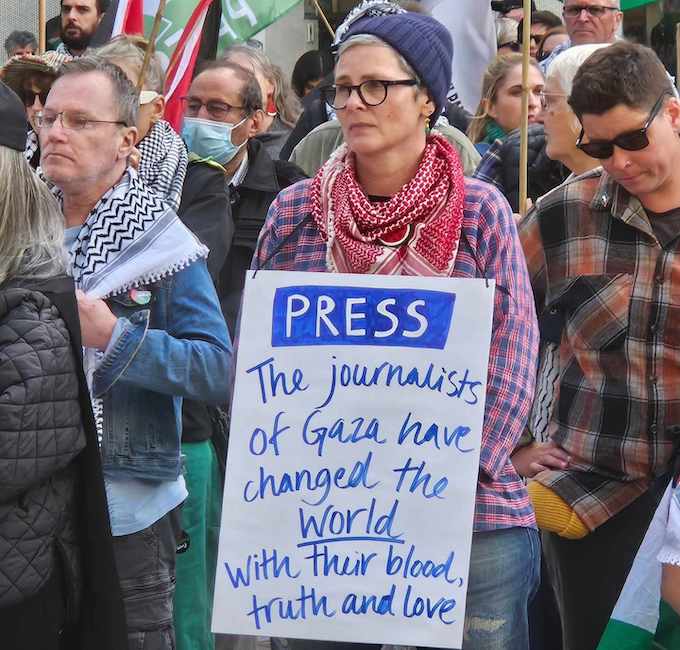
“They stand as exceptions in a region where press freedom is being steadily eroded.”
Fiji scored a remarkable 16-place climb to 24th, just two places behind New Zealand, after the scrapping of the draconian Media Industry Development Act in 2023, but this was certainly no grounds to be complacent.
Responding to the rankings and after a woman journalist in Tonga was threatened at gunpoint at Kele’a Voice FM radio station by a jailed-for-life drug gangster’s hooded henchman in Tonga, Pacific Islands News Association (PINA) president Kalafi Moala (himself Tongan and a doyen of Pacific media) declared:
“Threats against press freedom are unfortunately ongoing in the Pacific. The incident in Tonga demonstrates that the enemies of press freedom can come from anywhere — not always the government or those in power, but anyone averse to truth and transparency.
“Whether it is in Fiji, Samoa, Papua New Guinea, Solomon Islands, Vanuatu, French Polynesia or anywhere else in the Pacific, media freedom must be protected, advocated for and exercised to the fullest.”
Smear. Kill. Repeat: The constant horror for journalists in Gaza Video: Al Jazeera
Deafening silence on Gaza
But for all the lively debate and responses across the Asia-Pacific to this year’s Press Freedom Index results, there was a deafening silence and lack of collegial concern from New Zealand to Taiwan about the elephant in the global media freedom room: the unprecedented and chilling wholesale assassinations of Palestinian (and now Lebanese) journalists by the Israeli military forces.
Many of them were targeted and murdered for doing their jobs.
And those still surviving have been risking their lives (and those of their families) day and night while truth-telling to the world with extraordinary courage.
“Under Article 79 of Additional Protocol I to the Geneva Conventions (1977), journalists on ‘dangerous professional missions in armed conflict’ must be treated as civilians. It is one of the clearest protections in international law,” write Majdolin Hasan and Wadih Sabbagh of the Global Investigative Journalism Network (GIJN).
“Yet in Gaza, their cameras and press vests have become targets.”
Statistics on this Israeli bloodlust are varied, depending on the source and methodology and criteria in compiling the information. According to the latest figures on the Committee to Protect Journalists (CPJ) Gaza database, 264 journalists have been killed, 174 wounded and 107 imprisoned. These figures include war-related killings of journalists and media workers in Gaza, Yemen, Lebanon, Iran and Israel.
“By silencing the press, Israel is silencing those who document and bear witness to what human rights groups and UN experts agree is a genocide. CPJ calls on the international community to hold Israel to account for its unlawful attacks on journalists; ensure international media is given immediate, independent access to Gaza; and open humanitarian corridors for journalists.”
Death toll even higher
Some media counts put the death toll even higher. A United Nations human rights web page, for example, cites UN Human Rights Chief Volker Türk saying in a statement to mark World Press Freedom Day that the situation for journalists in Gaza is a “death trap”.
“Israel’s war in Gaza has become a death trap for the media. My office has verified the killing of nearly 300 journalists since October 2023, with many more injured,” Türk said.
He urged States to investigate all violations against media workers and expressed alarm at the lack of accountability for killings of journalists.
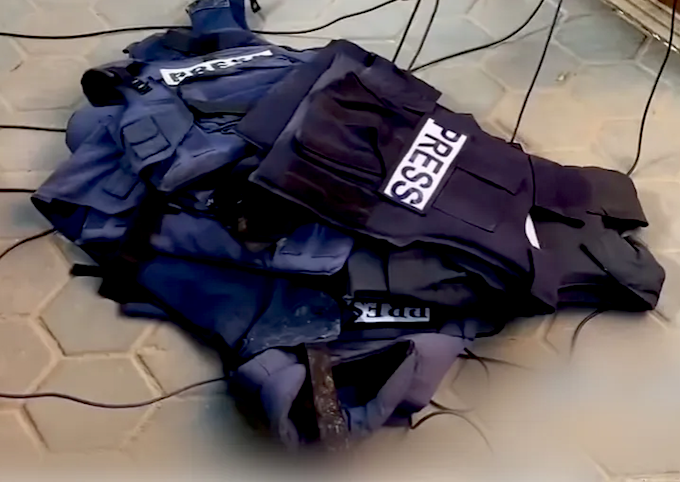
“This year alone, at least 14 journalists have been killed. Over the past 20 years, only around one in 10 killings has led to full accountability,” Türk said.
In January 2024, I wrote an article for Declassified Australia that was already an “early warning” indicator of the growing death toll among Palestinian journalists. My earlier media freedom articles had frequently dealt with the Philippines, which used to be among the worst countries for the killing of journalists.
In the article, “Silencing the messenger”, I also warned against the growing censorship in what was already emerging as the greatest moral issue of our times: “Western journalists taking a stand against their media outlets’ biased coverage of the Israeli war on Gaza are being targeted with career threats and even dismissal. But their colleagues in Palestine are suffering a worse fate.”
I called on journalists to make a stand for truth-telling and in solidarity with their colleagues in Gaza.
Shameful NZ silence
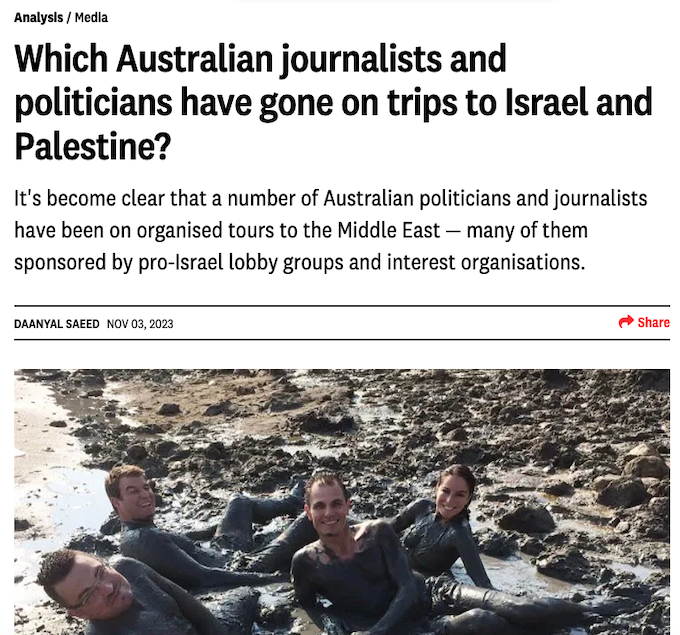
Yet while the silence in the Pacific is perhaps not surprising given the conflicted collaboration of several governments, such as Fiji and Papua New Guinea, on the wrong side of history, in New Zealand it is shameful. At least in Australia, there has been a strong pushback by journalists against the bias in the mainstream, and one independent publication, Crikey, has been publishing a “register” of journalists who have been on paid junkets to Israel and are regarded as potentially compromised.
Media editor Daanyal Saeed wrote: “It’s become clear that a number of Australian politicians and journalists have been on organised tours to the Middle East — many of them sponsored by pro-Israel lobby groups and interest organisations.”
A similar grooming of New Zealand journalists has also been carried out by pro-Israel lobby groups’ “sponsorship” in recent years, but no media has published a comprehensive list.
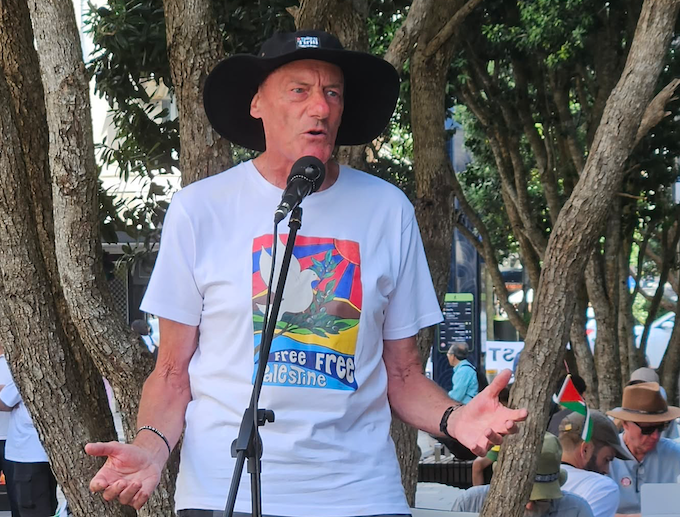 PSNA national campaigns coordinator John Minto . . . “Long history of false smears of antisemitism against anyone criticising Israel.” Image: David Robie/Asia Pacific Report
Is this “captive journalists” phenomena one of the factors for the perceived bias of much of the New Zealand media? John Minto, national campaigns coordinator of the Palestine Solidarity Network Aotearoa (PSNA), the largest and most visible advocacy and protest group in the country, agrees: “The large number of journalists here, who should know better, who have taken all expenses paid trips to Israel are part of Israel’s building of a propaganda base.
“Another important factor is the long history of false smears of antisemitism against anyone criticising Israel. Editors think twice about reporting anything showing Israel in a bad light.
“Just last week an RNZ journalist talked on radio about an interview she had done with UN Special Rapporteur on Human Rights in the Occupied Palestinian Territories, Francesca Albanese, and that the interview would be heard on the Nine to Noon show early the following week. The interview was then advertised to be broadcast on the Monday morning but then never appeared on the programme.
“Pressure from the anti-Palestinian racists in the pro-Israel lobby is the only sensible explanation. Most likely it will simply be buried — along with what’s left of RNZ’s journalistic integrity.”
Limited independent reportage
It needs to be realised too that New Zealand media has a limited independent “international” reportage tradition in contrast to Australia and many other countries. What international coverage with a New Zealand perspective that did exist, largely disappeared after the closure of the country’s only independent news agency, the 131-year-old NZ Press Association cooperative. This shut down in 2011.
Minto blames the narrow range of international news as another factor in why New Zealand media seems so slanted.
“The media industry here takes its overseas content solely from Western news sources such as AP [Associated Press, American], Reuters and the BBC [both British-based] alongside UK and US newspapers such as The New York Times, Washington Post and Daily Telegraph. It is packaged by Israeli sympathisers embedded in senior positions across these outlets and the inevitable result is a stream of pro-Israeli propaganda rather than balanced and accurate journalism.
“The recent analysis by The Intercept underscores this built-in bias in favour of Israel and against Palestinians.”
The Pacific Journalism Review also ran a special edition in July 2024 focused on systemic bias in the New Zealand and some international media. The provocative title theme was “Gaza, genocide and media: Will journalism survive?” and it was aimed at alerting journalists that declining credibility was at stake over this critical moral issue of our times.
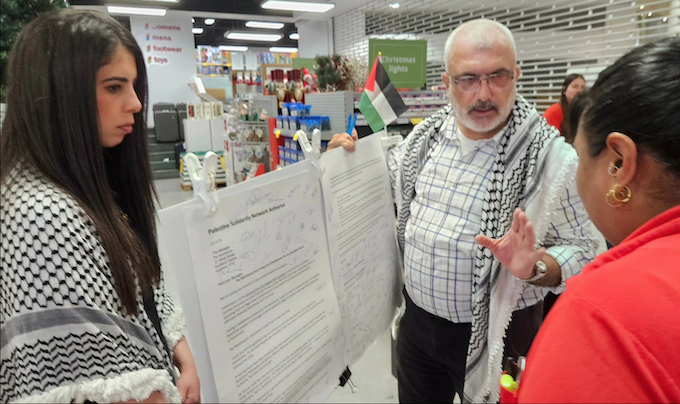
Maher Nazzal, a Palestinian New Zealander who is a community advocate and chair of the Palestine Forum of New Zealand, echoes this view.
“Much of the New Zealand media coverage on Palestine has been shaped through Western political narratives and reliance on international wire services that often frame events primarily through an Israeli lens,” he says. “This has contributed to the dehumanisation or invisibility of Palestinian voices, including journalists working under unimaginable conditions in Gaza.”
Courage and professionalism
A good point. The courage and professionalism of Gaza journalists has been widely acknowledged around the globe, including their collectively winning the UNESCO/Guillermo Cano World Press Freedom Prize in 2024, yet NZ journalists seem to be reluctant to recognise this, let alone give statements of solidarity. Why?|
“What Gaza journalists have shown over the past 19 months is extraordinary courage and professionalism,” says Nazzal. “Many continued reporting while displaced, grieving family members, facing starvation, or living under bombardment.
“Some paid with their lives simply for documenting the truth. Their work has become one of the few direct windows into what is happening on the ground.
“Unfortunately, solidarity from many mainstream media institutions in New Zealand has been limited. There appears to be hesitation, fear of controversy, or political sensitivity around speaking openly on Palestine compared with other global conflicts.
“This silence itself becomes part of the problem.”
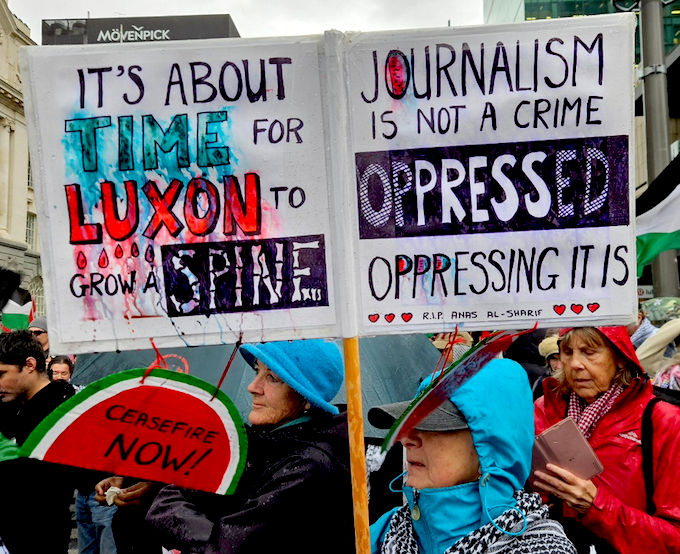
An independent New Zealand journalist who has been based in the occupied West Bank for two periods during the Israeli war on Gaza — in 2024 for two months and again last year – is also unimpressed with the local reportage.
Video and photojournalist Cole Martin from Ōtautahi Christchurch believes there is a serious lack of understanding in New Zealand media of the context of the structural and institutional violence towards the Palestinians.
“It is a media scene in Aotearoa that repeats very harmful and inaccurate narratives,” Martin says.
“Also, there is this idea to be unbiased and neutral in a conflict, both perspectives must have equal legitimacy.”
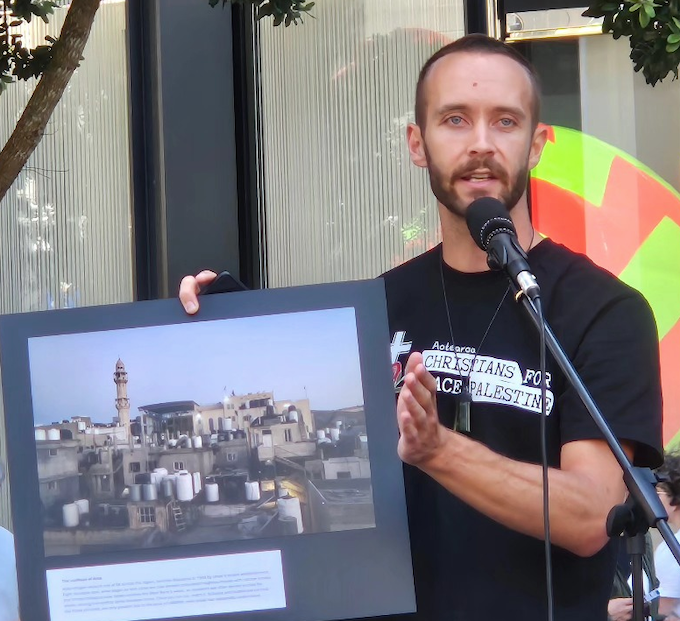
Israel regularly condemned
Reporters Without Borders has regularly condemned Israel for refusing to allow journalists from international media into Gaza, except on rare occasions embedded with Israeli military — they saw merely what Tel Aviv wanted them to see.
RSF has joined unsuccessful legal proceedings led by the Foreign Press Association (FPA) at Israel’s Supreme Court to challenge the ban on foreign journalists entering Gaza. It has also file multiple complaints with the International Criminal Court (ICC) calling for investigations into war crimes against journalists.
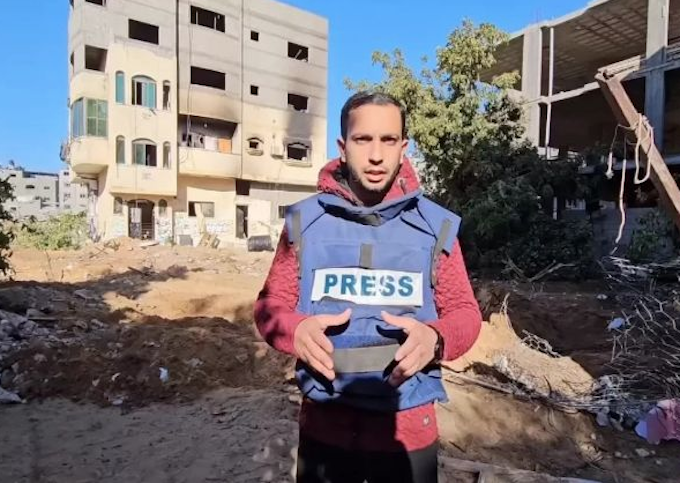
Minto believes New Zealand journalism is generally embedded with the “built-in bias of Western media” and with very few exceptions local journalists “are as complicit as journalists overseas”.
“I’m the first to admit it’s not easy for journalists to speak up and confront the bias — it’s easier to look the other way.
“Having said that I can’t understand why they would not report on Gaza journalists receiving awards for heroic reporting in circumstances when they know they are on an Israeli hit list. Journalistic solidarity based on fearless reporting which speaks truth to power is sorely missing.”
In general, says Minto, New Zealand journalists wait until Israeli Prime Minister Benjamin Netanyahu or US President Donald Trump make a statement before they report anything on Gaza or Palestine.
“And it’s not just reporting on the genocide in Gaza. Again and again I hear stories from our journalists — particularly in our state broadcaster TVNZ and RNZ — being directed towards reporting stories alleging antisemitism here rather than Islamophobia which is a far greater threat to our social fabric.
“It’s as though we never had a terrorist attack in 2019 which killed 51 Muslim worshippers.”
Media releases ignored
Mainstream news media routinely ignore media releases by Palestinian and solidarity groups.
“They are read by news editors and chief reporters but are otherwise disregarded,” admits Minto. “In fact, pretty much the only time our mainstream media report on PSNA is when we are attacked by the pro-Israel lobby as they did when we opposed Israeli soldiers coming here for rest and recreation from the genocide in Gaza or when we were attacked for ‘selective morality’ by an Iranian supporter of the old despotic Shah of Iran.
“On the other hand, our media releases are avidly read by our supporters and get good pickup on social media.”
While there was a fierce pushback by pro-Israel groups over PSNA’s controversial “Genocide Hotline” in New Zealand media, there was a more sympathetic response by many international media.
In fact, many campaigns in other countries, partly due to the inspiration of the Hind Rajab Foundation (HRF), are going further and actively seeking prosecutions of dual-citizen Israeli Defense Force (IDF) soldiers on rest and recreation to their countries.
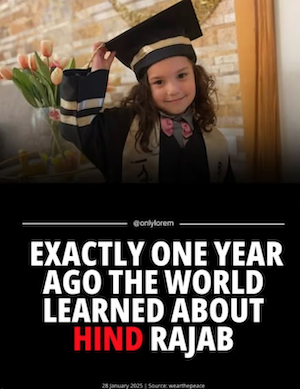
The Brussels-based foundation is dedicated to “breaking the cycle Israeli impunity and achieving justice for all the victims of the Gaza genocide” — more than 72,000 people so far, mostly women and children. It was established to honour the memory of five-year-old Hind Rajab who was murdered along with her family on January 29, 2024, in a brutal act of genocidal violence by the IDF.
Hind survived the initial attack, but was left trapped in a car alongside the bodies of her family. Her cries for help were broadcast to the world before being killed by an Israeli tank crew. An investigation found that the car was hit by 335 bullets. The inhumanity of this act has been captured in the 2025 docudrama film The Voice of Hind Rajab.
Hasbara propaganda
The PSNA and other groups have regularly complained to TVNZ and the Broadcasting Standards Authority (BSA) about the “appalling reporting” and “systemic bias”, but with little success. At a national hui in Rotorua earlier this month, the PSNA discussed plans to step up its campaign to push back against Israeli disinformation in response to the Knesset’s approval last month of a fivefold budget boost to $730 million for Hasbara — Israeli “public policy”, or propaganda.
In spite of the many obstacles, Maher Nazzal says public awareness about the Palestine struggle has grown significantly in Aotearoa as well as globally: “Community movements, independent journalists, academics, and grassroots organisations have helped challenge dominant narratives and push for more balanced coverage and accountability.”
To improve media coverage, Nazzal would like to see a greater inclusion of Palestinian perspectives, stronger journalistic independence, and willingness to apply universal human rights standards consistently, regardless of who the victims are.
Dr David Robie is convenor of the Asia Pacific Media Network’s Pacific Media Watch project, a former media professor and who previously worked as a journalist and editor with several global news agencies, including Agence France-Presse (AFP) and Gemini News Service.
