
POLITICAL CARTOONS: By Campion Ohasio
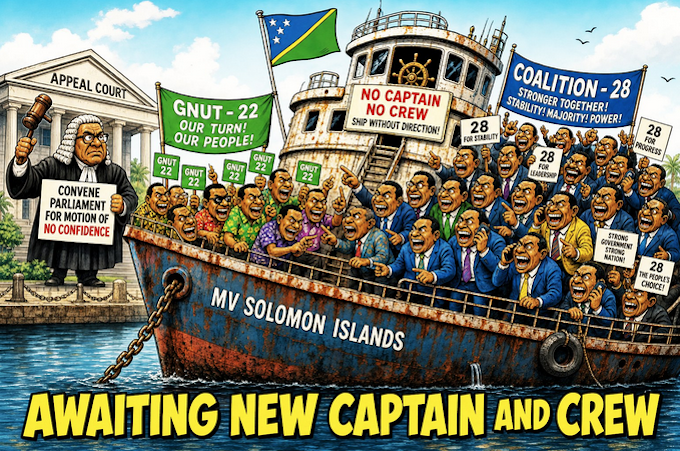
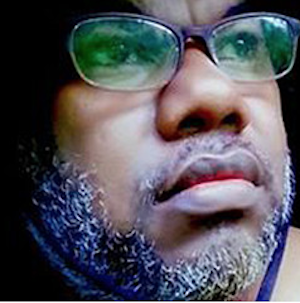
My name is Campion Ohasio, and I am currently the only political cartoonist in Solomon Islands.
In recent weeks, I have received many questions and comments from people across the country about my cartoons.
Some ask why I draw our national leaders in certain ways. Others wonder whether my caricatures are personal attacks or whether they violate the leaders’ rights.
- READ MORE: Other Campion Ohasio political cartoons and commentary
- Campion Ohasio artwork and cartoons
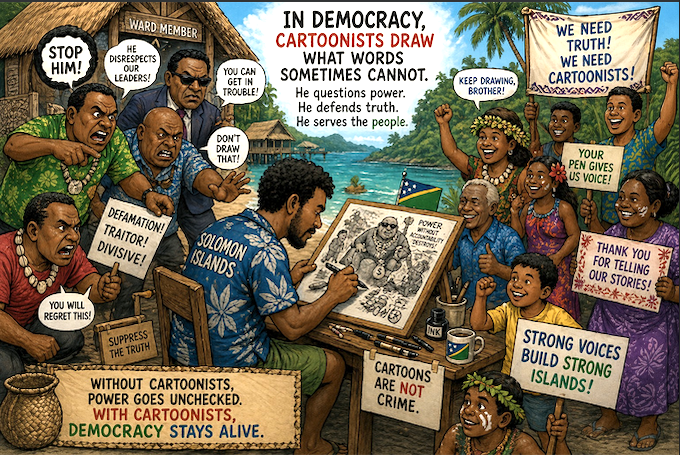
A few have even suggested that I should stop drawing critical cartoons.
I would like to take this opportunity to explain my work clearly and honestly.
As the only political cartoonist in our nation today, my job is simple: I use drawings to comment on the decisions, actions, policies, and laws made by our leaders.
My cartoons are not meant to attack any leader as a person or as a human being. Instead, they highlight issues that affect ordinary Solomon Islanders — issues such as corruption, poor governance, broken promises, and policies that may not serve the public interest.
Public figures hold power
In a democracy like ours, national leaders are public figures. They hold power on behalf of the people, and the people have every right to question how that power is used.
Political cartoons are one peaceful and creative way for citizens to express their views and hold leaders accountable.
As response to the many questions I have received. I believe healthy criticism is not an insult; it is an important part of democracy. Through my cartoons, I hope to encourage Solomon Islanders to think critically, ask questions, and stay engaged in the affairs of our country.
I remain committed to drawing honest cartoons that reflect the realities facing our people, always with the hope that our leaders will listen, improve, and serve the public interest better.
Thank you for your interest in my work.
A political caricature (also called a political cartoon) is a funny or exaggerated drawing that comments on a leader’s decisions, policies, or actions. It uses humour, symbols, and exaggeration to make a point about what the leader is doing in his public role.
Many people mistakenly think that a caricature is a personal attack on the leader as a human being. This is not true.
Eight reasons why leaders’ human rights are not violated
Here are eight reasons why cartoons and caricatures are not a violation of the leader’s human rights:
1 What a political caricature actually does: It criticises the actions, decisions, or policies of the leader.
It does not attack the leader’s basic human rights (such as the right to life, dignity, safety, or personal freedom). It focuses on the leader’s public role, not his private life as a father, husband, or ordinary person.
2 Why it isn’t a personal attack on human rights: Leaders are public figures. When someone becomes a president, prime minister, or national leader, they voluntarily step into the public spotlight. Their decisions affect thousands of citizens. Because of this, they must accept public criticism, including through cartoons and satire.
3 Criticism targets power, not the person: A caricature usually mocks a bad policy, a broken promise, corruption, or a harmful decision: not the leader’s race, family, or basic humanity. For example, drawing a leader as a big balloon floating away from reality is criticising his disconnection from people’s problems, not denying his right to exist.
4 Satire and humour are protected forms of free speech: In a democracy, freedom of expression includes the right to use humour and exaggeration to comment on those in power. Political caricatures have a long history of helping people understand and question government actions.
5 It doesn’t take away basic rights: Drawing a funny or critical cartoon does not stop the leader from: Living safely, having a family, practicing his religion, speaking freely, receiving fair treatment in court. These are real human rights. A caricature does not remove any of them.
6 Public accountability requires public criticism: Leaders exercise public power using taxpayers’ money. Citizens have the legitimate right to comment on how that power is used. Caricatures are one peaceful, creative way to do this.
7 Confusion between criticism and hate: Some leaders or supporters claim any negative drawing is “hate speech” or a human rights violation. This is usually an attempt to avoid accountability. Legitimate political satire is very different from threats, violence, or calls for harm.
8 Thin-skinned leaders weaken democracy: If leaders cannot handle a simple drawing or joke about their policies, it shows they may not be ready for the public scrutiny that comes with power. Strong leaders accept criticism; weak ones try to ban it.
For example: If a cartoon shows a leader pouring money into his own pocket while the people are hungry, it is highlighting possible corruption or bad priorities. It is not saying the leader has no right to live or be treated with dignity. It is saying: “Your policy or action is wrong.”
A political caricature is a form of peaceful criticism, not a personal attack. It doesn’t remove or violate any of the leader’s fundamental human rights. Instead, it exercises the public’s right to question those who hold power.
In a true democracy, leaders must learn to live with satire and criticism. Their job is to serve the people: and the people have the right to laugh, question, and point out when the leader is failing in that duty.
Criticising a leader’s actions through a caricature is about holding power accountable, not denying the leader’s humanity or human rights.
Campion Ohasio is a Solomon Islands-based self-taught visual artist, graphic designer, and prominent political cartoonist known for capturing South Pacific social issues. He gained early recognition in the 1990s for his work on Uni Tavur at the University of Papua New Guinea and later as a editor for the Solomons Voice. This commentary is republished with the author’s permission.