Inside PNG opinion . . . In the media utopia proposed through the Masiu Policy the media will be transformed into a propaganda machine that serves a government development agenda. Image: Inside PNG
Papua New Guinea’s Communications Minister, Timothy Masiu, has proposed a new policy that, if implemented, will affect the constitutional rights of freedom of speech through the media.
The draft policy named The National Media Development Policy 2023 (we perceive it as the “Media Control Policy”) proposes changes which include the licensing of journalists and the re-establishment of the PNG Media Council as a government regulation agency.
In the media utopia proposed through the Masiu Policy the media will be transformed into a propaganda machine that serves a government development agenda.
Section 46 of the National Constitution under Part III stating the freedom of expression. Image: Inside PNG
The implementation of the proposed policy, will allow for the government to create laws that go against Section 46(1) subsections (a), (b) and (c) and Section 46(2) under Part III of the constitution which relate to the freedom of the press.
We at InsidePNG are not opposed to supporting a positive development agenda provided the government does its job! That means, making sure students are educated; making sure funding goes to where it is meant to go; making sure theft of public money is stopped; and that there is honesty in the manner in which the country is governed.
Question for Communications Minister Timothy Masiu . . . Is the government going to license all the PNG content producers on Facebook, YouTube, Tiktok and other social media platforms?. Image: PNG govt
The absence of which requires the media to be the watchdog. It requires us to speak out and report on that which is wrong in society and wrong in the decisions that are being made.
In this government proposed utopia, journalists are licensed by the media council and any person not fulfilling the development agenda is penalized by having their licenses removed.
What if there is a ‘rogue government’?
Yes. Maybe, this government won’t do it. But what if, in Sir Mekere’s words, “We have a rogue government? Or a rogue Prime Minister in future?” And he/she chooses to use this policy to impose total suppression?
One question to Minister Masiu pops up: Is the government going to license all the PNG content producers on Facebook, YouTube, Tiktok and other social media platforms?
Journalists are content producers. Or should we all just call ourselves content producers to avoid paying for a journalist licence?
The Media Control Policy, as it should be called, states that it is designed to strengthen media freedom.
We at Inside PNG think otherwise.
We, 24 journalists and content producers, previously worked at a government-owned television station called EMTV. We were sacked because we protested against political influence in the newsroom.
We do not believe an additional layer of control will guarantee our freedom of speech. We believe licensing will be expensive for a start up like ours; and that government control of the media council will not serve our interests in upholding an essential and crucial pillar of democracy.
There is a reason why our founding fathers insisted on having a free media. It is to hold those in power accountable on behalf of the people of Papua New Guinea.
Look at real reasons
We ask that Timothy Masiu step back and take a look at the real reasons behind pushing for a policy that promotes media control.
Be the government that promotes media freedom. Be the government that promotes debate in public forums instead of a government that creates an environment that suppresses freedom of expression.
Invest in the education of journalists and media practitioners if you are serious about improving the media. Invest policies that lower internet costs. Provide scholarships for media practitioners.
In short, be the minister who promotes constitutional freedoms.
Inside PNG is an independent Papua New Guinean media and news company specialising news updates and other local content in the country. This editorial is republished with permission.
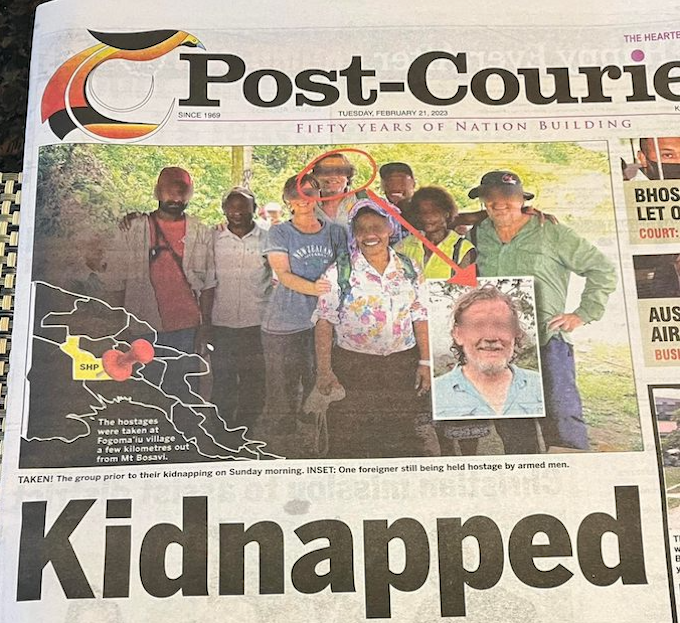
An Australian-based anthropology professor and three Papua New Guinean women researchers are being held captive inside the jungles of the Southern Highlands after they were kidnapped at gunpoint in Fogoma’iu village in the Bosavi LLG.
Four local guides who were also seized were told to jump into the Hegigio river after being released by their captors after they were held for a few hours on Sunday morning.
A local villager (name withheld) spoke exclusively to the Post-Courier last night saying that the other four hostages – three of them reportedly from the University of Papua New Guinea — had been moved a further 10km inland.
“The number of the gang members have now risen from 15 to 21 with the inclusion of another six men joining the group,” the villager said.
“The group remains adamant that their request for K3.5 million (NZ$1.6 million) remains before the hostages are released.”
The four who were released told locals in harrowing detail how after their release how their arms and legs had been bound with the professor threatened at gunpoint.
Fogoma’iu villagers said on Sunday morning at 2am that the home the research team were sleeping in at their village, a few kilometres from Mt Bosavi, was surrounded by several armed men.
Early hours
The group was taken away in the early hours of the morning.
Deputy Police Commissioner Philip Mitna said the armed criminals, reportedly from Komo in Hela province, were returning from Kamusi when they had sighted the victims and taken them hostage.
On Sunday morning, Prime Minister James Marape met with PNG’s Security Council and was briefed about the kidnapping and ransom demand of the group.
“This is the first time a ransom is attached to a hostage situation like this and I will make further statements in due time,” said Deputy Commissioner Mitna.
“This is the very first time and we are treating this very, very seriously; we don’t want it to be a precedent for the future. We are working with authorities concerned, at the moment the government is staying out of this picture in terms of negotiating on the ground.”
The Australian and New Zealand High Commissions in Port Moresby have both stated they were “aware of this situation but for privacy reasons no further information will be provided”.
In a short reply to questions by the Post-Courier, the PNG Defence Force said: “Yes, PNGDF is fully aware of it. Since, it’s within the context of operations, no comments/statement will be disclosed.”
Logging camp raids
The Post-Courier has uncovered that the armed group — now numbering 21 — had tried in two separate attempts to rob two logging sites in the Middle Fly area earlier this month.
However, both attempts were unsuccessful. The group left Middle Fly and trekked 101km into Southern Highlans Province where it is alleged they came across the group of researchers.
Government and Security Council negotiators are continuing their communication with the armed men in a bid to secure their release.
Both ABC News and the PNG Post-Courier have chosen not to name the captives given the sensitivity over this hostage situation.
Republished from the PNG Post-Courierwith permission.
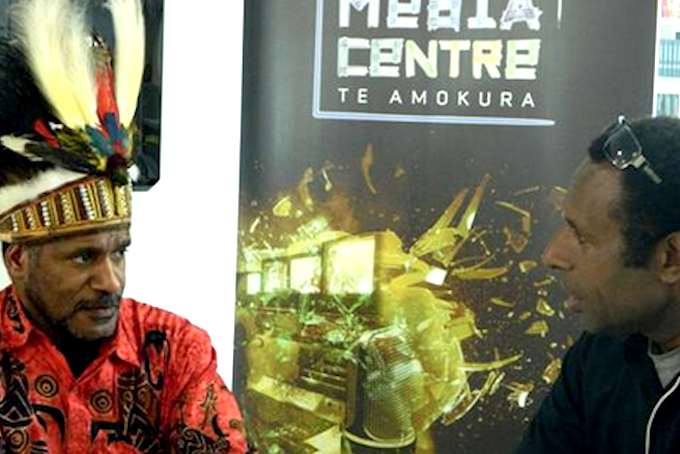
United Liberation Movement for West Papua president Benny Wenda (left) being interviewed by a PNG journalist, Henry Yamo, on a previous visit to New Zealand. Image: Del Abcede/Asia Pacific Report
A West Papuan independence movement leader, Benny Wenda, says the release of New Zealand pilot Phillip Mehrtens held hostage by armed rebels is out of his hands.
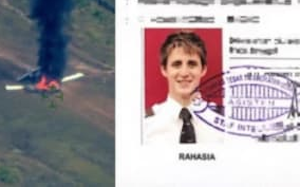
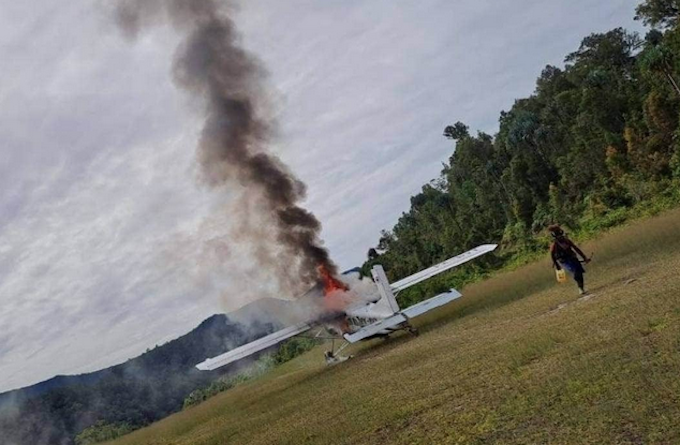
The West Papua National Liberation Army (TPNPB) fighters kidnapped Mehrtens on February 7 after he landed a small commercial passenger plane in Nduga regency.
The group then burned the Indonesian-owned Susi Air plane and demanded the New Zealand government negotiate directly for Merhtens’ release.
He told RNZ Pacific he did not condone the actions of the liberation army rebels and had called for them to release the pilot peacefully.
He said he sympathised with the New Zealand people and Merhtens’ family but insisted the situation was a result of Indonesia’s refusal to allow the UN Human Rights Commissioner to visit West Papua.
“Because the place where it’s actually happening is where hundreds of thousands [of indigenous Papuans] have been displaced from 2018 up to now — in Nduga, Intan Jaya, Mybrat and also Oksibil,” Wenda said.
‘Warning to Indonesia’
“So this happening right now is a warning to Indonesia to let the UN High Commissioner visit which they have been ignoring these last three years.”
Philip Mehrtens, the New Zealand pilot taken hostage at Paro, Nduga regency, and his aircraft set on fire. Image: Jubi News
“We are not enemies [with New Zealand]. We are very good,” Wenda said.
“New Zealand is a very strong supporter of West Papua.
“I do not think the [TPNPB] group can harm the pilot unless Indonesia uses the situation to do harm. That is my concern.”
He said Indonesia should consider TPNPB’s demands.
Wenda is leading a delegation from the ULMWP that is currently in Fiji ahead of the Pacific Islands Forum.
The group has observer status in the Melanesian Spearhead Group (MSG) and is lobbying to become a full member.
This article is republished under a community partnership agreement with RNZ.
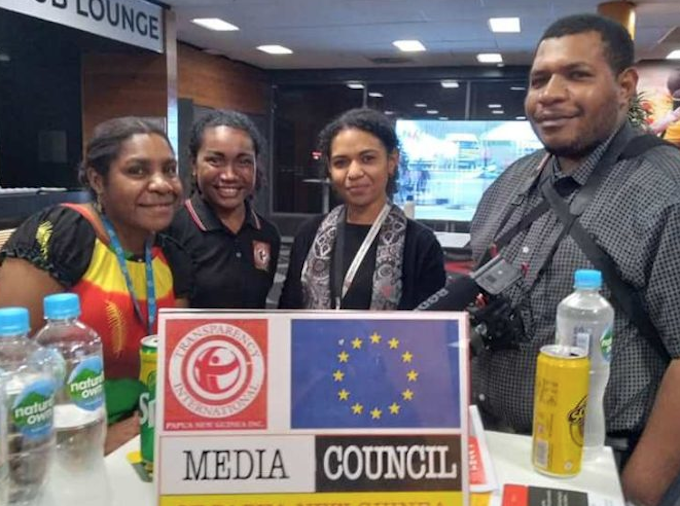
The Media Council of PNG working with Transparency International PNG in 2021 . . . community collaboration. Image: TI-PNG/FB
ANALYSIS: By Scott Waide in Port Moresby
The new media development policy being proposed by the Papua New Guinea Communications Minister, Timothy Masiu, could lead to more government control over the country’s relatively free media.
The initial deadline for feedback has been extended by another seven days from today. However, the Media Council of PNG (MCPNG) has requested a consultation forum with the government, as it seeks wider input from research organisations, academia and regional partners.
The government’s intention to impose greater control over aspects of the media, including the MCPNG, is ringing alarm bells through the region. This is to be done by re-establishing the council through the enactment of legislation.
The policy envisages the council as a regulatory agency with licensing authority over journalists.
The MCPNG was established in 1989 as a non-profit organisation representing the interests of media organisations. Apart from a brief period in the earlier part of its existence, it has largely been unfunded.
Over three decades, its role has shifted to being a representative body for media professionals and a voice for media freedom.
The president of the council, Neville Choi, says there are aspects of the media that need government support. These include protection and training of journalists. However, the media is best left as a self-regulating industry.
According to Choi:
“Media self-regulation is when media professionals set up voluntary editorial guidelines and abide by them in a learning process open to the public. By doing this, independent media accept their share of responsibility for the quality of public discourse in the country, while preserving their editorial autonomy in shaping it. The MCPNG was set up with this sole intent.
“It is not censorship, and not even self-censorship. It is about establishing minimum principles on ethics, accuracy, personal rights while preserving editorial freedom on what to report, and what opinions to express.
The regulatory framework proposed for the new media council includes licensing for journalists. Licensing is one of the biggest red flags that screams of government control.
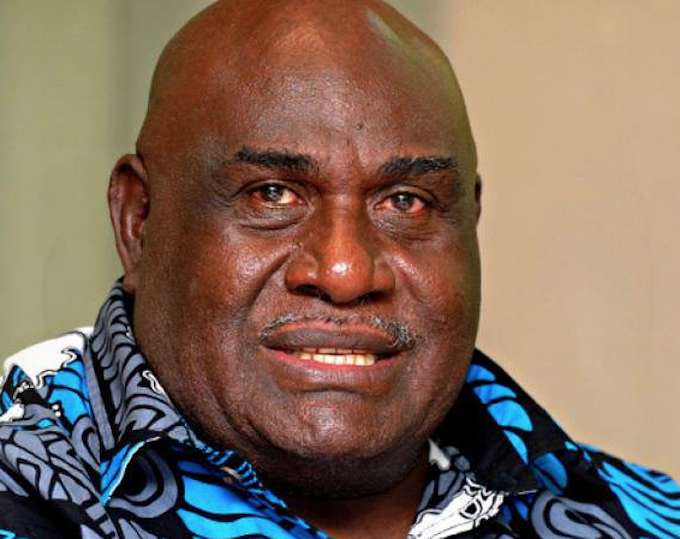
Communications Minister Timothy Masiu . . . Licensing is one of the biggest red flags that screams of government control. Image: PNG govt
While the PNG media has been resilient in the face of many challenges, journalists who have chosen to cover issues of national importance have been targeted with pressure coming directly from within government circles.
In 2004, the National Broadcasting Corporation’s head of news and current affairs, Joseph Ealedona, was suspended for a series of stories on the military and the government. The managing director of the government broadcaster issued the notice of suspension.
In 2019, Neville Choi, then head of news for EMTV, was sacked for disobeying orders not to run a story of a military protest outside the Prime Minister’s office in Port Moresby. Choi was later reinstated following intense public pressure and a strike by all EMTV journalists and news production staff.
Two years later, a similar scenario played out when 24 staff and EMTV’s head of news were sacked for protesting against political interference in the newsroom.
For many within the industry, licensing just gives the government better tools to penalise journalists who present an unfavourable narrative.
On paper, the government appears to be trying to remedy the desperately ailing journalism standards in PNG. But the attempt is not convincing enough for many.
Fraser Liu, an accountant by profession and an outspoken observer of national issues, says the courts provide enough of an avenue for redress if there are grievances and that an additional layer of control is not needed.
Liu said: “Media agencies and agents must be left alone to their own ends, being free from coercion of any sort, and if media reporting does in fact raise any legal issues like defamation, then the courts are the avenue for resolution. There is no shortage in common law of such case precedent. This is clearly an act by government to control media and effectively free speech.
“Government cannot self-appoint itself as a referee for free speech. Free speech is covered under our Constitution and the courts protect this basic right. The policy talks about protection of reporters’ rights. Again, what is this? They already have rights guaranteed by the Constitution.
Coming back to poor journalism standards, Minister Masiu, a former broadcast journalist himself, has been challenged on many occasions to increase investment into PNG’s journalism schools. It is a challenge he has not yet taken up despite the abundant rhetoric about the need for improvement.
The energy of government should be put into fixing the root problem contributing to the poor quality of the media: poor standards of university education.
Scott Waide is a journalist based in Lae, Papua New Guinea. He is the former deputy regional head of news for EMTV and has worked in the media for 24 years. This article was first published on the DevPolicy Blog and is republished here under a Creative Commons licence.
A New Zealand-based media research and publication group has called for an “urgent rethink” on Papua New Guinea’s draft media development policy, saying its proposed regulation plan for the country’s media council and journalists threatened a free press.
The Asia Pacific Media Network Inc. (APMN), publishers of the research journal Pacific Journalism Review, said in a statement that it supported the Community Coalition Against Corruption (CCAC) plea for more time to be granted for public consultation.
The CCAC is a loose coalition of NGOs chaired by Transparency International-PNG and the PNG Media Council and is supported by churches, chambers of commerce, the Ombudsman Commission and the Office of the Public Solicitor.
While noting that the Ministry of Information and Communications Technology had granted an extra week from today following the original 12 days for submissions on the draft National Media Development Policy 2023, the APMN said this was still “manifestly inadequate and rather contemptuous of the public interest”.
“In our view, the ministry is misguided in seeking to legislate for a codified PNG Media Council which flies in the face of global norms for self-regulatory media councils and this development would have the potential to dangerously undermine media freedom in Papua New Guinea,” the statement said.
The statement was signed by the APMN chair Dr Heather Devere; deputy chair Dr David Robie, a retired professor of Pacific journalism and author, and a former head of journalism at the University of Papua New Guinea in the 1990s; and Pacific Journalism Review editor Dr Philip Cass, who was born in PNG and worked on the Times of Papua New Guinea and Wantok newspapers.
“The draft policy appears to have confused the purpose of a ‘media council’ representing the ‘public interest’ with the objectives of a government department working in the “national interest’,” the statement said.
Risk to PNG media freedom
“If the ministry pushes ahead with this policy without changes it risks Papua New Guinea sliding even further down the RSF World Press Freedom Index. Already it is a lowly 62nd out of 180 countries after falling 15 places in 2021.”
The statement made reference to several principles for media freedom and media councils, including Article 42 of the Papua New Guinea Constitution, the M*A*S systems of media accountability and ethics pioneered by Professor Claude-Jean Bertrand, and the 2019 declaration for press freedom of the Melanesian Media Freedom Forum.
It said the ministry needed to consult more widely and take more time to do this.
The APMN called on the ministry to “immediately discard” the proposed policy of legislating the PNG Media Council and regulating journalists and media “which would seriously undermine media freedom in Papua New Guinea”.
It also asked the ministry to extend the public consultation timeframe with a “realistic deadline to engage Papua New Guinean public interest and stakeholders in a meaningful dialogue”.
It added that “essentially journalism is not a crime, but a fundamental pillar of democracy as espoused through the notion of a Fourth Estate and media must be free to speak truth to power in the public interest not the politicians’ interest”.
“Keep listening to the radio. You guys have done a great job updating people and it’s very much appreciated,” the Civil Defence Minister Keiran McAnulty told Newstalk ZB’s last Sunday afternoon as Gabrielle was just beginning to wreak havoc.
Barely two weeks earlier, sudden and catastrophic flooding in and near Auckland caught the media off-guard, but some commentators claimed the heavy warnings about Gabrielle were oppressively ominous — and risked “crying wolf”.
Gabrielle ended up as a national emergency and sparked non-stop rolling news coverage. There were few flat spots on TV and radio, and live online reporting around the clock also give a comprehensive picture — and pictures — of what was going on.
It stretched newsrooms to their limits, but news reporters’ work was skillfully and selectively supplemented with a steady stream of vivid eyewitness accounts.
Forestry slash flood
Tolaga Bay farmer Bridget Parker’s description on RNZ Nine to Noon of yet another inundation at her place with added forestry slash was among the most confronting (and sweary).
Checkpoint’s emotional interview on Wednesday with a couple that owned a house in which a friend “disappeared under water” was compelling — but also chilling.
RNZ’s Kate Green arrived in Gisborne on Monday with the only means of communicating that worked — a satellite phone.
“You can’t even dial 111. Everything that can break is broken,” she told RNZ Morning Report listeners, quoting the local mayor.
RNZ’s Māni Dunlop, who managed to fly in on Tuesday, told listeners that from the air the East Coast looked “buggered”.
Gisborne is a city and Tairawhiti a region not well covered at the best of times by New Zealand’s national media, which have no bureaux there. It is a bit of an irony that in the worst of times, it was so hard to get the word out.
But the locally-owned Gisborne Herald stepped up, somehow printing editions every day distributed free to 22,000 homes — with the help of NZDF boots n the ground on some days.
Proud news day
“I’m proud to be working on this paper today,” reported Murray Robertson said, signing off an eye-opening video of scenes of the stricken city posted online once power came back and a fresh Starlink unit kicked in.
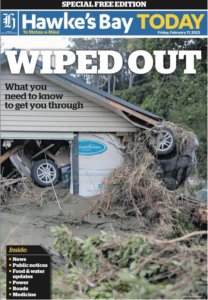
On Wednesday, ZB’s Mike Hosking pleaded on air for diesel to keep their signal up in Hawke’s Bay, while the editor of Hawke’s Bay Today Chris Hyde — only months into his job — found himself literally powerless to publish when the rivers rose, cutting the electricity and cutting him off from many of his staff.
“The first day I was in a black hole. In a big news event, the phones ring hot. This was the biggest news event in Hawke’s Bay since the Napier earthquake . . . and my phone wasn’t ringing at all,” he told Mediawatch.
“Wiped out” – the Hawke’s Bay Today’s first (free) edition after the cyclone news “back hole”. Image: Screenshot APR
Hyde, just 32 years old, was a student in Christchurch when The Press stunned citizens by publishing a paper the morning after the deadly 2011 quake.
Hyde said NZME chief editor Shayne Currie and The New Zealand Herald’s Murray Kirkness were instrumental in putting the Auckland HQs resources into getting NZME’s upper North Island dailies promptly back in print and available for free.
“Just keep supporting local news, because in moments like this, it really does matter,” Chris Hyde told Mediawatch.
On Wednesday, Hyde had the odd experience of seeing Tuesday’s edition of the paper on the AM show on TV before he had even seen it himself.
Cut-off news focus
On Wednesday, RNZ switched to focus on news for areas cut off or without power — or both — where people were depending on the radio. RNZ’s live online updates went “text-only” because those who could get online might only have the bandwidth for the basics.
Day of ‘danger’
This is the first copy of Tuesday’s @hawkesbaytoday that I’ve seen. It never made it to my home, to our offices, to our subscribers. When I wrote that headline had some idea of what was coming, and yet we had no idea. pic.twitter.com/57PmhoeyYr
Media analyst and former New Zealand Herald editor Dr Gavin Ellis . . . “Those two episodes where chalk and cheese. Coverage of Cyclone Gabrielle by all media was excellent.” Image: RNZ News
But Gavin Ellis said earlier this week he couldn’t get a clearer picture of Gabrielle’s impact without mainstream media.
“Those two episodes where chalk and cheese. Coverage of Cyclone Gabrielle by all media was excellent, both in warning people about what was to come – although that wasn’t universal – and then talking people through it and into the aftermath, And what an aftermath it’s been,” he told Mediawatch.
“This is precisely why we need news media. They draw together an overwhelming range of sources and condense information into a readily absorbed format. Then they keep updating and adding to the picture.” he wrote.
Retro but robust radio
“If you’re sitting on your rooftop surrounded by water, you can still have a radio on.” Image: Flickr/RNZ News
“It’s even more pressing if you haven’t got electricity, and you haven’t got those online links. That was when radio really came into its own,” said Ellis.
“Organisations like the BBC,and the ABC (Australia) are talking about a fully-digital future and moving away from linear broadcasting. What happens to radio in those circumstances if you haven’t got power? If you’re sitting on your rooftop surrounded by water, you can still have a radio on, he said.
“We need to have a conversation about the future of media in this country and the requirements in times of urgency need to be looked at,” Ellis told Mediawatch.
RNZ’s head of news Richard Sutherland’s had the same thoughts.
NZ head of news Richard Sutherland . . . “It has certainly been a reminder to generations who have not been brought up with transistor radios they are important to have in a disaster.”
“It has certainly been a reminder to generations who have not been brought up with transistor radios they are important to have in a disaster. This will also sharpen the minds of people on just how important ‘legacy’ platforms like AM transmission are in civil defence emergencies like the one we’ve had,” he said.
“With the Tonga volcano, Tonga was cut off from the internet. and the only thing getting through was shortwave radio. In the 2020s, we are talking about something that’s been around since the early 1900s still doing the mahi. In this country, we are going to need to think very carefully about how we provide the belt and braces of broadcasting infrastructure,” he told Mediawatch.
“Everyone was super-aware of the way that the Auckland flooding late last month played out — and no one wanted to repeat that,” said Sutherland, formerly a TV news executive at Newshub, TV3, TVNZ and Sky News.
“Initially the view was this is going to be bad news for Auckland because Auckland, already very badly damaged and waterlogged. But as it turned out, of course, it ended up being Northland, Coromandel, Hawke’s Bay have been those areas that caught the worst of it,” Sutherland told Mediawatch.
News contraction
“Over the years, and for a number of reasons, a lot of them financial, all news organisations have contracted. And you contract to your home city or a big metropolitan area, because that’s where the population is, and that’s where the bulk of your audience is,” he said.
“But this cyclone has reminded us all as a nation, that it’s really important to have reporters in the regions, to have strong infrastructure in the regions. I would argue that RNZ is a key piece of infrastructure,” he said.
“This incident has shown us that with the increasing impact of climate change, news organisations, particularly public service lifeline utility organisations like RNZ, are going to have to have a look at our geographic coverage, as well as our general coverage based on population,” he said
“We are already drawing up plans for have extra boots on the ground permanently . . but also we need to think where are the regions that we need to have more people in so that we can respond faster to these sorts of things,” he said.
“We are at a moment where we could do something a bit more formal around building a more robust media infrastructure . . . for the whole country. I would be very, very keen for the industry to get together to make sure that the whole country can benefit from the combined resources that we have.
“Again, everything comes down to money. But if the need is there, the money will be found,” he said.
Now that the government’s planned new public media entity is off the table, it will be interesting to see if those holding the public purse strings see the need for news in the same way.
This article is republished under a community partnership agreement with RNZ.
Cyclone Gabrielle death toll rises to 11 after two deaths reported today https://t.co/ifMjC2wFsc
With the rise of free market economics in the 1980s, direct government investment in the social value of forestry was considered inefficient and wasteful. Image: Getty Images/The Conversation
The severe impacts of Cyclone Gabrielle on the North Island, and the five severe weather events experienced by the Thames–Coromandel region in just the first two months of 2023, are merely the latest examples of more frequent erosion-triggering rainfall events over the past decade.
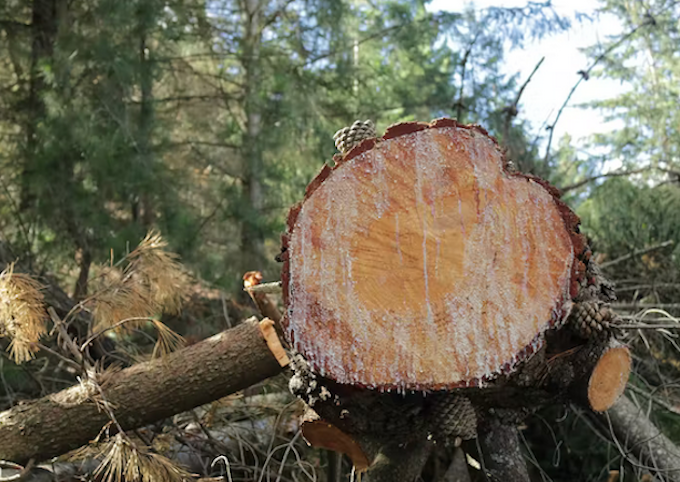
Inevitably with the heavy rain, soil, rocks and woody material (also known as “slash”) from landslides have flowed down onto valleys and flood plains, damaging the environment and risking human safety.
Clear-fell harvesting of pine forests on steep erosion-prone land has been identified as a key source of this phenomenon.
So we need to ask why we harvest pine forests on such fragile land, and what needs to change to prevent erosion debris and slash being washed from harvested land.
Pine was a solution Ironically, most of these pine forests were planted as a solution to soil erosion that had resulted from the clearing of native forests to create hill country pastoral farms.
The clearing of native forests happened in the 19th and early 20th centuries, but the consequences — erosion, flooding and floodplains covered in silt and rocks — only became apparent decades later.
So the need to reforest large areas of erosion-prone farmland is scientifically well accepted.
Why pine? But why did we choose radiata pine for our reforestation efforts instead of other tree species?
Even today, it is hard to find affordable and feasible alternatives to radiata pine. Affordable is the key word here.
We are not a rich country and our liking for “Number 8 wire” solutions makes a virtue out of necessity — we don’t have the money to pay for anything fancier.
Radiata pine is a cheap and easy tree to establish and it grows fast and reliably. Planting native or other exotic trees, such as redwoods, is possible, but it costs more and needs more skill and care to grow a good crop.
‘Has to be done’: Forestry industry under fire as McAnulty calls for slash to be investigated https://t.co/7lx5G2t07W
The problem with radiata pine is that if grown as a commercial crop, it is clear-fell harvested after about 28 years.
The clear-felled land is just as erosion-prone as it was before trees were planted — with the added threat of large amounts of logging slash now mixed in with the erosion debris.
It can take six years or more after harvesting before the replanted pine trees cover the ground and once again provide protection to the soil.
Benefits of pine come with a cost If we take a long-term perspective, research shows that even a radiata pine forest that is clear-felled once every 28 years will still significantly reduce erosion, compared with a pastoral farm on erosion-prone hill country.
This is because the erosion from the clear-felled forest is outweighed by the reduced erosion once the replanted trees cover the land.
However, this is not much comfort to communities in the path of the flood-borne soil and logs from that clear-felled forest. It’s difficult to take a long-term perspective when your backyards and beaches are covered with tonnes of wood and soil.
Slash a byproduct of efficiency Whatever benefits radiata pine forests bring, we need to transition forest management away from “business as usual” clear-felling on erosion-prone hill country.
This transition is possible, but one important problem is not often discussed. The pine forests are privately owned by a range of people including iwi, partnerships made up of mum-and-dad investors and large international forestry companies.
All these people have created or acquired these forests as an investment.
A typical pine forest investment makes a good financial return, but this assumes normal efficient forestry, including clear-felling large areas with highly-productive mechanised logging gangs.
It has become clear that we need to manage forests differently from this large-scale “efficient” model to reduce the risk of erosion and slash from erosion-prone forests.
Changing how we manage these forests will inevitably reduce the economic return, and forest investors will absorb this reduction.
When a cyclone bears down on the East Coast, it’s not just wind and rain residents brace for. https://t.co/h9TJr3Q2dv
Time for a permanent fix If we go back to when the pine forests being harvested today were planted, the forests had a social value — not just in reducing erosion but in providing employment in rural areas where few jobs were available.
This social value was recognised by government funding, initially through tree planting by a government department, the NZ Forest Service. With the rise of free market economics in the 1980s, such direct government investment was considered inefficient and wasteful.
The Forest Service was disbanded in 1987 and its forests were sold to forestry companies. However, the government continued to promote tree planting on erosion-prone land with subsidies to private investors.
As these forests grew, they came to be considered purely as business investments and were bought and sold on that basis. When the time came to harvest the trees, the expectation was that these could be clear-fell harvested in the same conventional way as commercial forests growing on land with no erosion risk.
As erosion started occurring on the harvested sites, it became clear why these trees were originally planted as a social investment to protect the land and communities from soil erosion.
Aotearoa New Zealand has achieved control of erosion with a Number 8 wire solution- encouraging private investors to grow commercial pine forests on erosion-prone land. The problem with Number 8 wire solutions is that after a while the wire fails, and you have to find a permanent fix.
Conventional commercial pine forestry was a good temporary solution, but now we need to find a more sustainable way to grow forests on our most erosion-prone lands – and it won’t be as cheap.
New Zealand pilot Philip Mehrtens taken captive by Papuan rebels . . . a "Papua Merdeka" - Free Papua message. Image: TPNPB screenshop APR
BACKGROUNDER: By David Robie
Papuan independence rebels are playing a desperate game of cat and mouse with Indonesian authorities over their hostage taking last week with a New Zealand pilot caught in the middle.
Christchurch-raised Philip Mehrtens, 37, a pilot for the national feeder airline Susi Air owned by a former cabinet minister and with Jakarta government supply contracts, was seized by rebels last Tuesday, February 7, shortly after he had touched down at the remote Paro airstrip near Nduga in the Papuan highlands.
Five Indigenous Papuans on board the aircraft were set free and the plane was set on fire.
After initial reports saying the authorities were trying to pinpoint the actual place where the rebels are in hiding and that a rescue operation is under way, the West Papua National Liberation Army (TPNPB) played a trump card today by releasing “proof of life” video footage and photos.
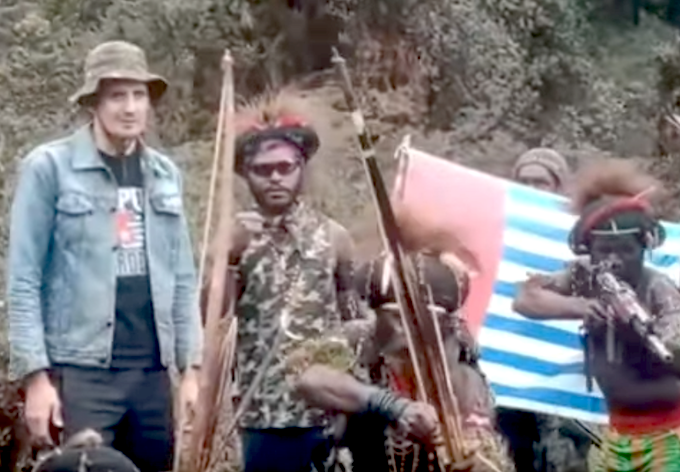
“Papua Merdeka!,” said Mehrtens in one of the obviously coached video messages. “The Papuan military have taken me captive in the fight for Papuan independence,” he added hesitantly while surrounded by a group of armed rebels.
Dressed in a denim jacket, he also wore a black tee-shirt displaying a clenched fist in the colours of the West Papuan Morning Star flag, banned under Indonesian law. The tee also sported the slogan “Papua Merdeka” (Papuan Freedom).
The rebels have gone to great pains to make it appear their captive is relaxed and in good health.
High stakes
The stakes are high with the Papuan rebels trying to attract world attention to their cause for independence, “forgotten” by the world for more than the past half century.
But analysts warn that there is a risk of a tragic outcome if a botched rescue takes place as happened the last time Indonesian security forces raided rebels of the Organisasi Papua Merdeka (OPM – Free Papua Movement) who had seized hostages at Mapenduma in 1996, also in the Papuan highlands.
A report of the “proof of life” messages from the TPNPB rebels by the ABC’s Jakarta correspondent Anne Barker. Video: ABC Australia
Although in that operation on 15 May 1996 nine hostages were freed, two were killed by the captors while eight OPM guerrillas were killed and two captured.
Six days earlier another rescue bid had ended in disaster when an Indonesian military helicopter crashed killing all five soldiers on board.
The Susi Air plane seized by the Papuan pro-independence rebels at the remote Paro airstrip and then set ablaze. Image: TPNPB
Originally, on 8 January 1996, 29 members of a World Wildlife Fund research mission had been seized. However, the rebels promptly released 19 captives while holding 11 – four British, two Dutch and five Indonesians.
There were also international repercussions with the International Red Cross (ICRC) being accused of collaborating with the Indonesian military – later admitted by Jakarta after it was reported that they had used a white helicopter that had been involved in negotiations with soldiers on board.
White mercenaries were also accused of being part of the operation.
Rebel leader Kelly Kwalik had dropped a plan to release the remaining hostages, accusing the ICRC of not honouring their agreement. “We took the researchers hostage because we had no other way for our cause to be acknowledged,” he told the New Internationalist.
Human rights violations
The rescue raid mounted by Kopassus special forces – codenamed Operation Cenderawasih (Bird of Paradise) — was under the command of general Prabowo Subianto, former son-in-law of then President Suharto.
The Papuan rebels are trying to reverse the narrative that is projected by Jakarta that the Melanesian provinces of Papua and West Papua (now increased to five) adjoining the independent country of Papua New Guinea are an integral part of Indonesia and those Indigenous people resisting are “terrorists”.
The rebels and also peaceful groups seeking self-determination argue that a 1969 referendum with 1025 handpicked voters supervised by the United Nations in the former Dutch colony voting “unanimously” for Indonesian rule in a so-called Act of Free Choice was a “sham”.
The lesson from this latest hostage-taking crisis, according to Australian academic Dr Camellia Webb-Gannon, who is author of Morning Star Rising: The Politics of Decolonisation in West Papua, is that there needs to be serious negotiations.
Echoing some of the demands of the rebels, she wrote in a backgrounder on the deeper issues of Indonesian colonialism that New Zealand, Australia – both accused of collaborating militarily with Jakarta — and other governments needed to seriously engage about human rights violations in Papua.
Webb-Gannon admitted it may not be enough to resolve the current crisis, “but it would be a long overdue and critical step in the right direction.”
Avoiding disproportionate response
As she stressed, negotiations for the release of Mehrtens must be handled carefully to “avoid further disproportionate responses” by the Indonesian military.
“The kidnapping is not justified, but neither is Indonesia’s violence against West Papuans — or the international community’s refusal to address the violence.”
There are other Papuan pro-independence players that are seeking a peaceful path to self-determination, such as the United Liberation Movement for West Papua (ULMWP) that is seeking to become a full member of the Port Vila-based Melanesian Spearhead Group (MSG).
Exiled leader Benny Wenda issued a statement offering his “deepest sympathies” to the friends and family of hostage Mehrtens.
“At the same time, the ULMWP executive reiterates and reassures the New Zealand government and the world that we are [committed] to a peaceful, diplomatic approach,” he said in his statement condemning the Indonesian divide and rule policies.
“Our roadmap is very clear: we are pursuing the unified West Papuan goal of Merdeka – national liberation – peacefully, through diplomatic political mechanisms.
“We must not lose sight of the fact that Indonesia uses this kind of violence as part of a distinct strategy of occupation.
Wenda highlighted how Indonesia’s Parliament had last year passed a law creating three new provinces in West Papua, as part of the renewal of the 2001 ‘Special Autonomy’ programme.
“West Papuans overwhelmingly reject ‘Special Autonomy’, more than 700,000 of us having signed a petition against it. Provincial division is a justification for increased militarisation in West Papua, pure and simple,” he said.
“By creating new administrative divisions, Indonesia justifies the establishment of new colonial infrastructure and new military posts.
“They do not want dialogue or peaceful protest — they want chaos and violence, for West Papua to remain a war zone.
“As our land is militarised and destroyed, our people are forcibly displaced.
“Depopulation is another key part of Indonesia’s colonial strategy: by removing West Papuans from our ancestral lands, they allow for massive exploitation of our natural resources.”
100,000 Papuans displaced
Wenda said that up to 100,000 West Papuans had been internally displaced since 2019, including close to half of Nduga’s entire population.
“They continue to live in the bush, deprived of education, food, and adequate medical facilities, unable to return to their homes.
“Indonesia labels us as terrorists while committing state terrorism in our lands.”
The ULMWP’s peaceful demands are:
The withdrawal of all Indonesian troops from West Papua;
Immediate access to West Papua for the UN High Commissioner for Human Rights;
Cancellation of ‘Special Autonomy’, including the new provincial division; and
An immediate referendum on independence.
“The kidnap of a foreign pilot naturally brings West Papua to the attention of international media,” Wenda said. “But West Papuans are tortured and murdered daily by Indonesian forces, and international media are banned from seeing it.”
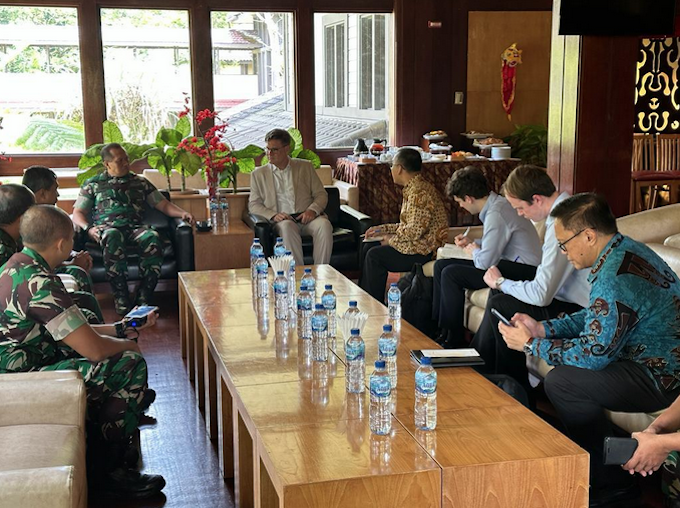
New Zealand diplomats meeting with Indonesian military officers at Timika in the Papuan highlands. Image: Jubi News
Meanwhile, Jubi News reports three New Zealand diplomats and two staff of the Indonesian Ministry of Foreign Affairs have travelled to Timika, the capital of Mimika Regency, in the new Central Papua province this week to check on progress with the rescue operation.
They met military officers, including the commander of Timika region, Lieutenant-General Nyoman Cantiasa, on Monday. He appealed for “international support” to discuss the crisis with the UN High Commissioner for Human Rights.
Hopefully, a peaceful resolution can be found.
‘Proof of life’: Papua hostage takers say images show NZ pilot is alive https://t.co/b3aLjgkizm
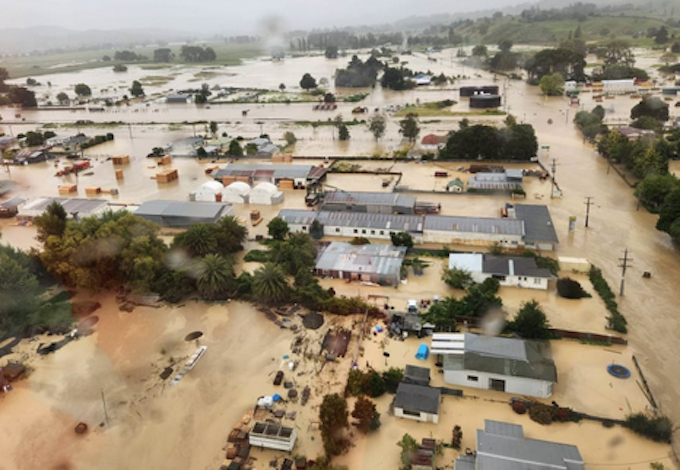
The northern Hawke's Bay town of Wairoa (pop. 8000) . . . cut off by the Cyclone Gabrielle flooding. Image: Wairoa District Council's Emergency Controller/RNZ News
At least 2500 people have been displaced by Cyclone Gabrielle this week, says Emergency Management Minister Kieran McAnulty.
About 1000 of those are in the Far North and another 1000 in Hawke’s Bay. The rest are mostly from Auckland, with some also in Bay of Plenty and Waikato.
But little is known about the situation in the east, with communications minimal and access hampered due to continued high winds and rain.
Wairoa is of particular concern, with the National Emergency Management Agency (NEMA) “working very hard” to find out what is happening in the northern Hawke’s Bay region.
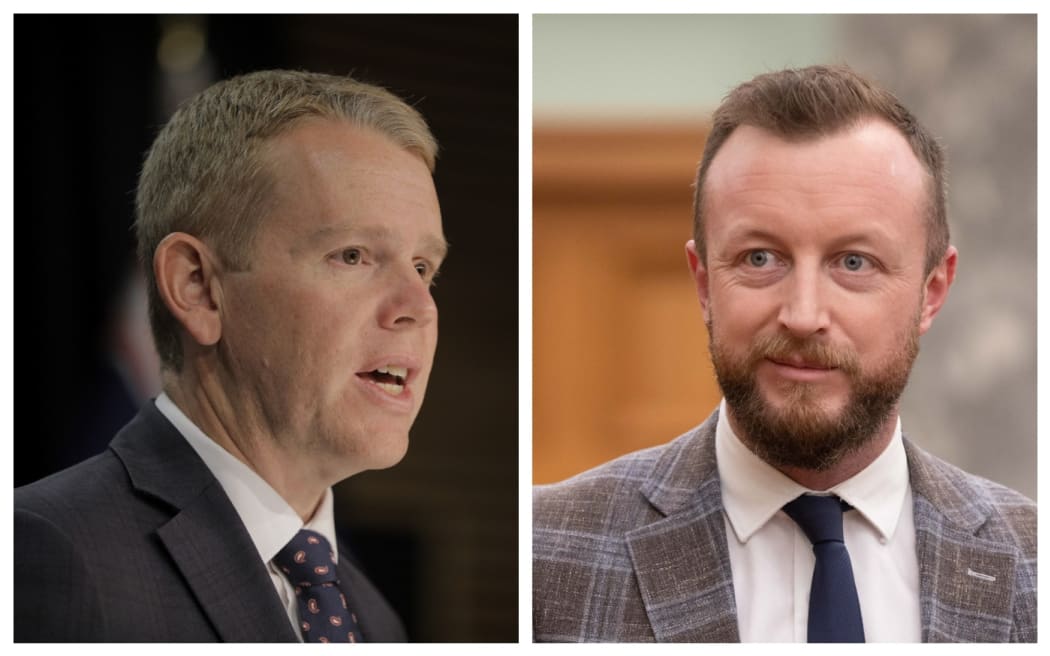
Prime Minister Chris Hipkins (left) and Emergency Management Minister Kieran McAnulty . . . Cyclone Gabrielle is the most significant weather event in New Zealand so far this century. Image: RNZ News
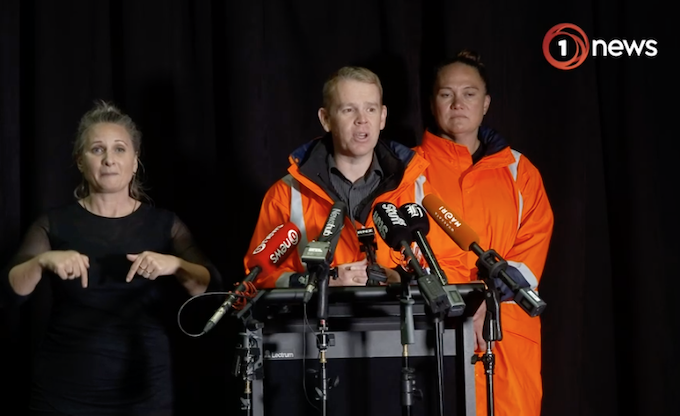
Prime Minister Chris Hipkins, speaking to media yesterday with McAnulty, said the Telecommunications Emergency Forum “has been activated and is working closely with NEMA and local Civil Defence organisations”.
“The first priority… remains the restoration of regional cellphone signals. High winds and ongoing poor weather is hampering progress in that area.”
There has also been a fibre cut affecting Taupō, Hastings and Napier and other areas.
‘Completely isolated’ Wairoa only has one day’s food, Civil Defence says https://t.co/UBjWe4suda
Comparisons to Cyclone Bola Hipkins called Cyclone Gabrielle the most significant weather event in New Zealand so far this century.
“The severity and the breadth of damage we are seeing has not been seen in a generation.”
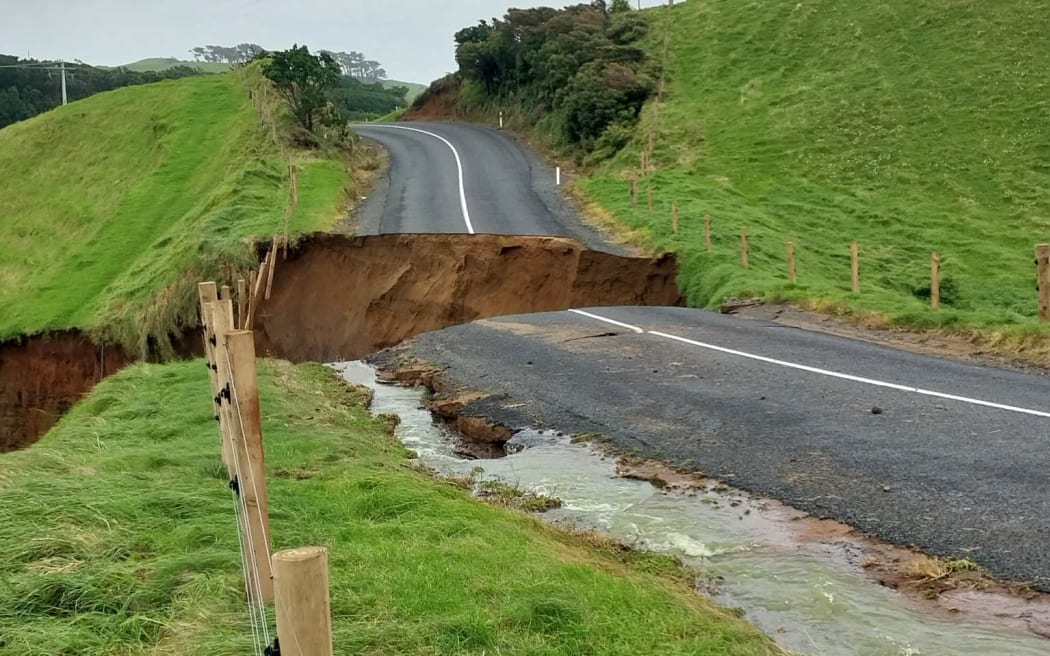
Manukau Heads Rd in the Awhitu Peninsula slice in half. Image: Hamish Simpson/RNZ News
Asked how it compared to 1988’s destructive Cyclone Bola, Hipkins said he “wasn’t around in this kind of role” then so could not immediately compare the two. Officials were still building a picture of the impact of the cyclone, he said.
“In the last 24 hours or so, Fire and Emergency New Zealand have 1842 incidents related to Cyclone Gabrielle in their system . . . Two-hundred defence force personnel have so far been deployed and there are more on standby.”
Transpower had announced a national grid emergency, following the loss of power to the Hawke’s Bay and Gisborne, with potential for extended periods of outages, Hipkins said.
“This is a very significant event for the electricity network and the companies have not seen this level of damage since Cyclone Bola . . .
“The situation is changing rapidly and the lines companies are expecting more customers to be affected. They are working to restore power as quickly as possible… but restoration in some parts may have to wait until weather conditions improve.”
Many supermarkets in Northland have been affected and closed. People were asked to only buy what they needed, Hipkins said, urging people to avoid non-essential travel. If it was unavoidable, people should let friends and family know where they were going, he added.
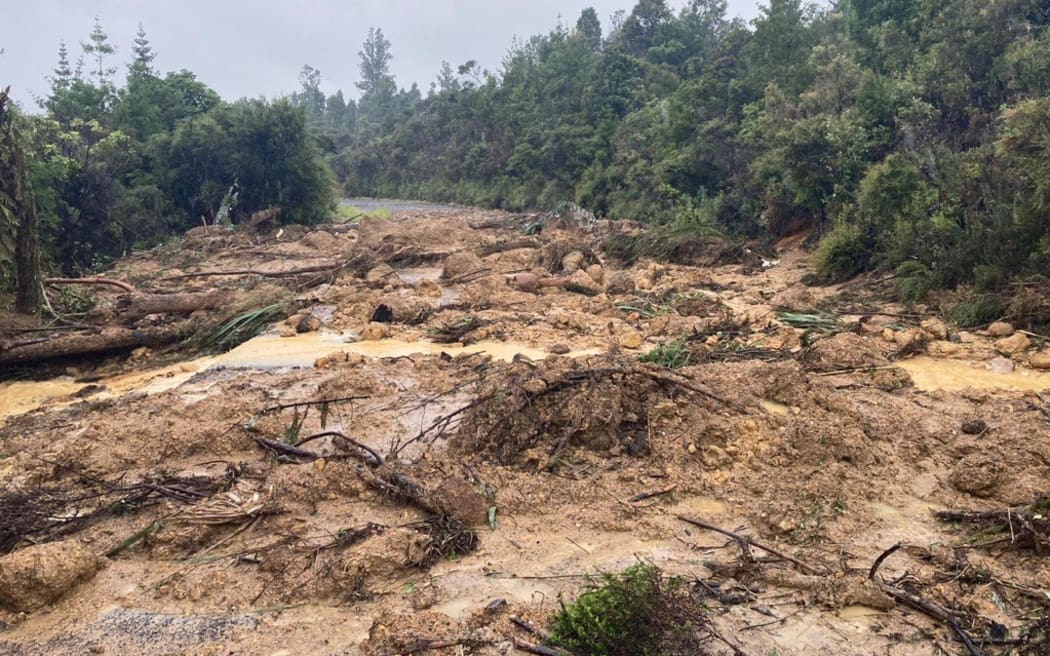
“A high number of roads have been affected by surface flooding and by slips.”
The latest available information is on the Waka Kotahi website, which remained the best source of information for anyone having to travel, Hipkins said.
“On behalf of all New Zealanders I want to extend all of our gratitude to our emergency responders. They are putting in the hard yards and their lives are on the line in the service of their communities.
“To the families of the volunteer firefighters who responded to events in Muriwai last night and to the wider Fire and Emergency New Zealand family, our thoughts and hopes are with all of you.”
“To the men and women of the Defence Force, the linemen and women, the communication companies, the supermarkets, the transport companies getting goods to where they are needed, the roading crews that are making that all possible, thank you to you also.”
Danger remains The good news is the weather is expected to ease overnight, Hipkins said. But that did not mean the danger would ease as quickly.
“People should still expect some bad weather overnight, particularly on the East Coast . . . as we know from experience over the last few weeks, even if the rainfall eases off a bit, more rainfall can compound on top of the rainfall that we’ve already seen.
“So when it comes to slips and so on, we could still see more of that even as the weather starts to ease. We’re still in for a bumpy time ahead.”
The prime minister declined to put a figure on what the recovery might cost, but said insurance companies would cover a “significant portion”.
“People will pick numbers out of thin air and they may be right or they may be wrong. It’s really too early to put an exact number on it.”
A slip across the road at Sailors Grave, near Tairua, during Cyclone Gabrielle. Image: Leonard Powell/RNZ news
He said it could impact on already fast-rising food prices, and would not rule out seeking international assistance.
Hipkins said something would definitely need to be done to lessen the risk of slash destruction in the future.
Climate change’s contribution As for climate change’s impact on the sheer scale of the storm, Hipkins rejected a suggestion that his actions since taking over as Prime Minister have weakened New Zealand’s efforts towards reducing emissions.
As a part of his policy reset, Hipkins canned a planned biofuels mandate and extended subsidies for fuel, a major contributor to warming.
“There is significant debate about whether the biofuels mandate was the right way of reducing our emissions from transport, when there are the other alternatives and other things that we can look at,” he explained.
“In terms of extending the fuel subsidies, we have to acknowledge that actually, there are people still having to get in their cars every day to drive to work, and we need to support them through what is a very, very difficult time at the moment.
“That does not in any way — I don’t believe — undermine our commitment to tackling the causes of climate change.”
He said Gabrielle’s impact would have “underscored” the need to keep reducing emissions.
“It is real, it is having an impact and we have a responsibility to do something about it.”
This article is republished under a community partnership agreement with RNZ.
Cyclone Gabrielle: Rural Hawke’s Bay residents scramble onto roofs to avoid flooding https://t.co/7qEDU7dSkh
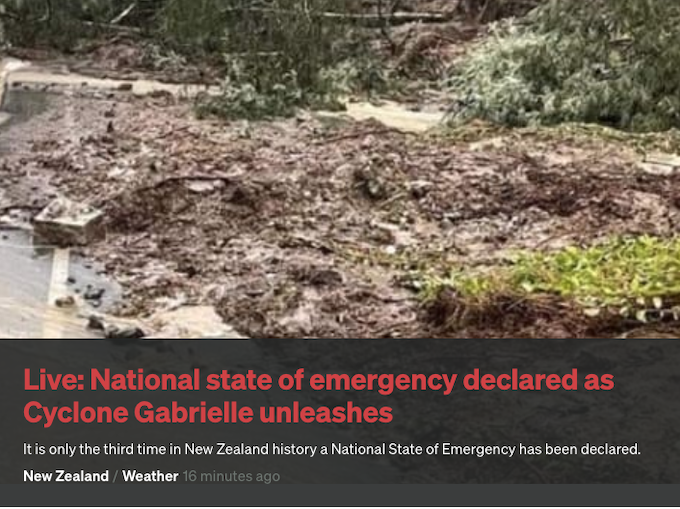
A national state of emergency has been declared in Aotearoa New Zealand . . . only the third time in the country's history after the 2011 Christchurch earthquakes and the covid-19 pandemic. Image: RNZ screenshot APR
A national state of emergency has been declared today after Cyclone Gabrielle unleashed fury across the North Island of Aotearoa New Zealand.
There has been widespread power outages, flooding, slips and damage to properties.
Emergency Management Minister Kieran McAnulty said both the prime minister, and the Opposition spokesperson for emergency management were supportive of the move.
He said this was an unprecedented weather event impacting on much of the North Island.
This is only the third time in New Zealand history a national state of emergency has been declared — the other two being the 2011 Christchurch earthquakes and the covid-19 pandemic.
The national state of emergency is declared. Video: RNZ News
The declaration, signed at 8.43am, will apply to the six regions that have already declared a local State of Emergency — Northland, Auckland, Tairāwhiti, Bay of Plenty, Waikato, and Hawkes Bay.
A national state of emergency gives the National Controller legal authority to apply further resources across the country and set priorities in support of a national level response.
Speaking to media at the Beehive, McAnulty said Tararua District had also declared a state of emergency.
‘Significant disaster’
“This is a significant disaster with a real threat to the lives of New Zealanders,” he said.
“Today we are expecting to see more rain and high winds. We are through the worst of the storm itself but we know we are facing extensive flooding, slips, damaged roads and infrastructure.
“This is absolutely not a reflection on the outstanding work being done by emergency responders who have been working tirelessly, local leadership, or civil defence teams in the affected areas.
“It is simply that NEMA’s advice is that we can better support those affected regions through a nationally coordinated approach.”
He said the National Emergency Management Agency (NEMA) met with local civil defence teams early this morning and heard that a national state of emergency would be beneficial for them.
It allowed the government to support affected regions, coordinate additional resources as they are needed across multiple regions and help set the priorities across the country for the response, he said.
“Our message to everyone affected is: safety first. Look after each other, your family and your neighbours. Please continue to follow local civil defence advice and please minimise travel in affected areas.
‘Don’t wait for services’
“If you are worried about your safety — particularly because of the threat of flooding or slips — then don’t wait for emergency services to contact you.
“Leave, and seek safety either with family, friends, or at one of the many civil defence centres that have been opened.”
He said iwi, community groups and many others had opened up shelters and were offering food and support to those in need.
“I also want to acknowledge that there have been reports of a missing firefighter – a volunteer firefighter — who is a professional and highly trained but left their family to work for their communities and the search continues.
“Our thoughts are with the FENZ staff and their families.”
Acting Civil Defence Director Roger Ball said we have had multiple weather warnings and watches in place and the effects of the cyclone will continue to be felt across the country today.
He said that if other regions or areas declared local states of emergency, they would be added to the national declaration.
“Under a state of national emergency, myself as the director and my national controller have authority to direct and control the response under the Civil Defence Emergency Management Act, including allocation of resources and setting priorities.”
He said no effort would be spared.
This article is republished under a community partnership agreement with RNZ.
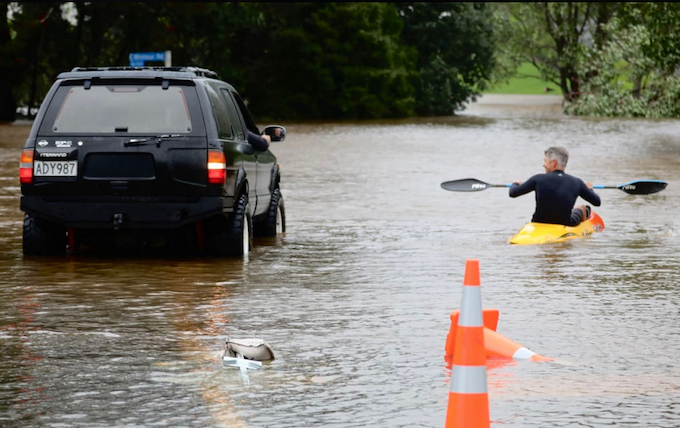
Prime Minister Chris Hipkins speaking at a media briefing today. Image: 1News screenshot APRFlooding on a main road near Waimauku in the Auckland region. Image: Marika Khabazi
Images of Hikuwai River bridge north of Tolaga Bay with the water level at more than 14m. Source: Manu Caddie FB